PRESENTER: Dave Verrill, MS, ACSM-CEP, FCEPA; University of North Carolina at Charlotte Department of Applied Physiology, Health, and Clinical Sciences
BRIEF SUMMARY
In this presentation I will discuss a number of Six-Minute Walk (6MW) test potential sources of error including factors that involve test location, the training effect, patient preparation, and not using standardized words of encouragement. I will talk about the differences in test performance walking on an oval track vs. walking on a straight hallway or a treadmill. I will explore issues with the patient who uses supplemental oxygen (e.g., can the CEP walk in front of or behind the patient pulling or pushing the tank, should oxygen tanks be pushed in a rollator during the test, use of oxygen concentrators). I will talk about the correct order to assess pre- and post-exercise physiologic measurements and the best equipment to use for monitoring the patient during the 6MW test. I will also present 6MW test data to track over time for best patient outcomes measurement documentation. Finally, I will discuss alternative tests for assessing submaximal functional performance including protocols using a Nu-Step seated pedaling ergometer and motor driven treadmill.
LEARNING OBJECTIVES
- The attendee will learn about potential sources of error when administrating the 6MW test to patients in cardiopulmonary rehabilitation programs.
- The attendee will learn about standardized instructions that should be used during the 6MW test.
- The attendee will learn about different ways to track 6MW test clinical outcome measurements.
- The attendee will learn about alternative tests to measure functional abilities if a 6MW test protocol cannot be implemented due to space or equipment limitations.
COST: FREE
CECs: 1 (one)
RECORDING: This event will be recorded. Access to a recording of this event will be available to all who register for 3 months after the event.
ABOUT THE PRESENTER
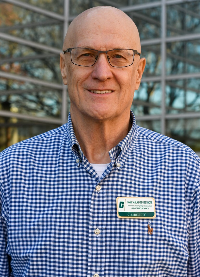
Dave Verrill is a Senior Lecturer and Laboratory Director in the Department of Applied Physiology, Health, and Clinical Sciences at the University of North Carolina at Charlotte. He is a Fellow of the AACVPR and CEPA and is past-president of both the Clinical Exercise Physiology Association (CEPA) and the North Carolina Cardiopulmonary Rehabilitation Association (NCCRA). He has worked in the field of exercise science and cardiopulmonary rehabilitation for over 45 years as a clinical exercise physiologist in the roles of cardiac laboratory director, cardiopulmonary and cancer rehabilitation specialist, and university professor. Dave has received four NCCRA Distinguished Service awards as well as the University of North Carolina at Charlotte Faculty Excellence Awards for Undergraduate Teaching (2014), Mentoring (2020 and 2025), and Community Service (2025).